
Puppy School
Raising a Puppy During Their First Year
By Maddy Tank · November 1, 2022 · 5 min read

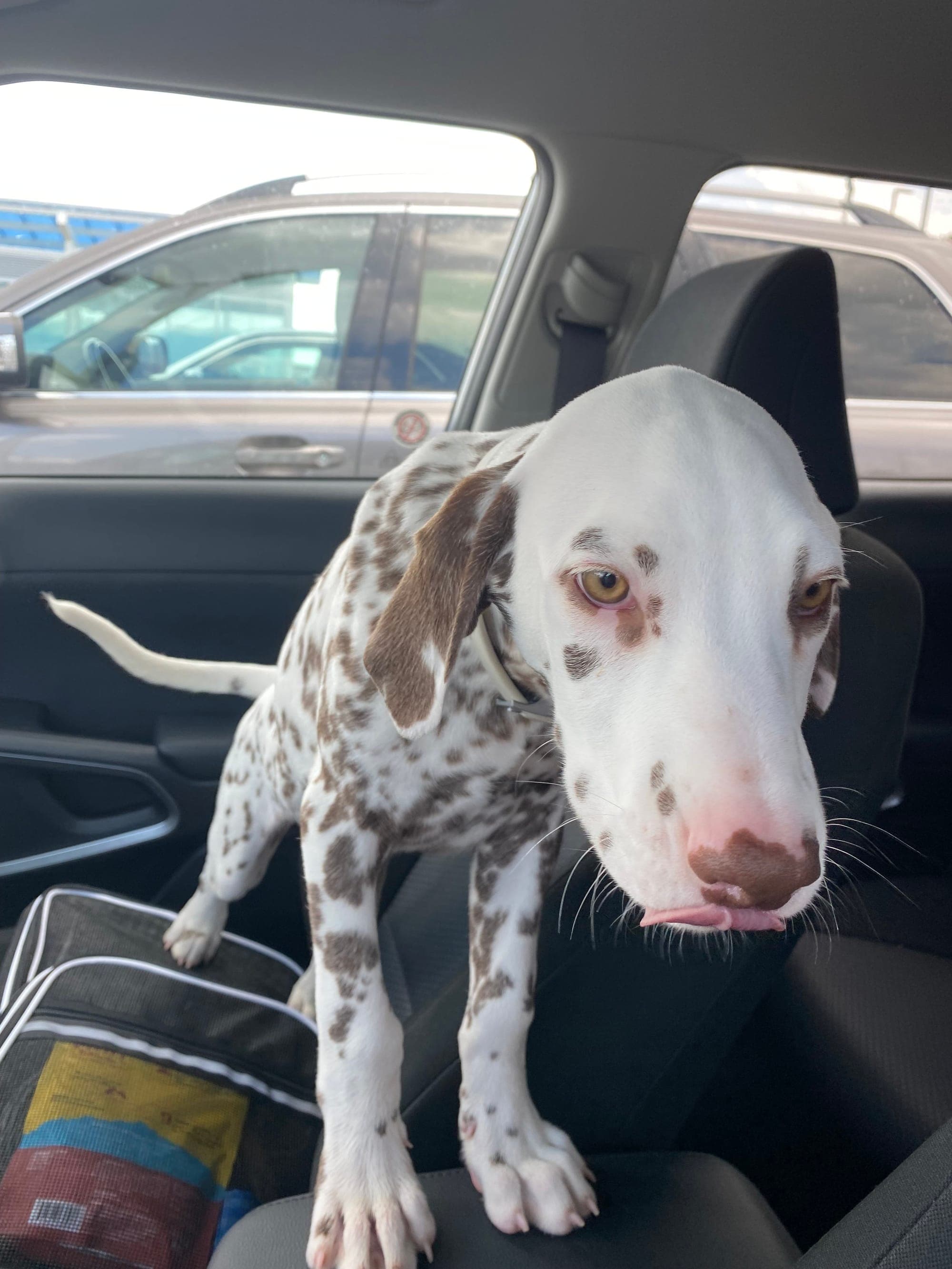
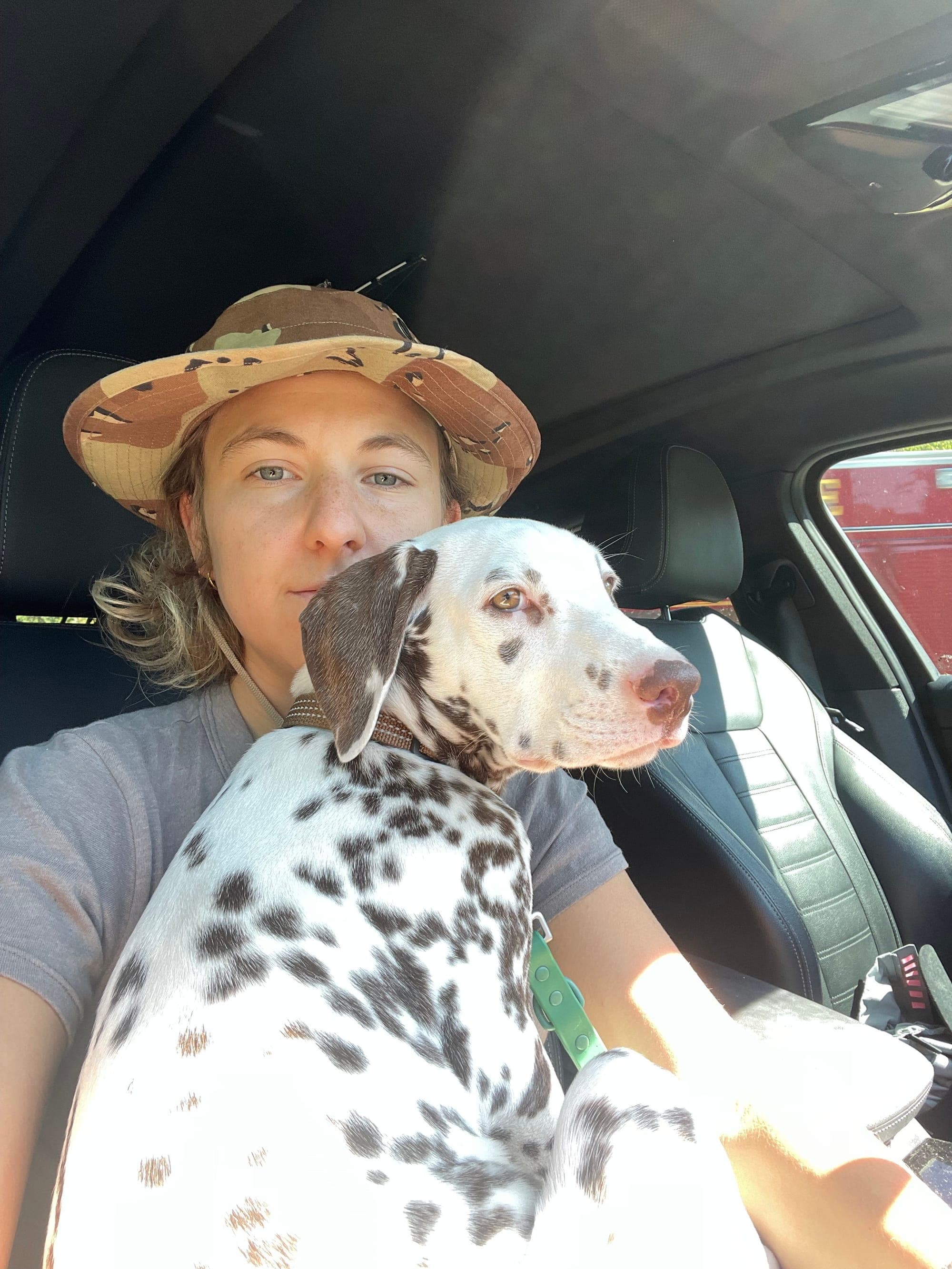
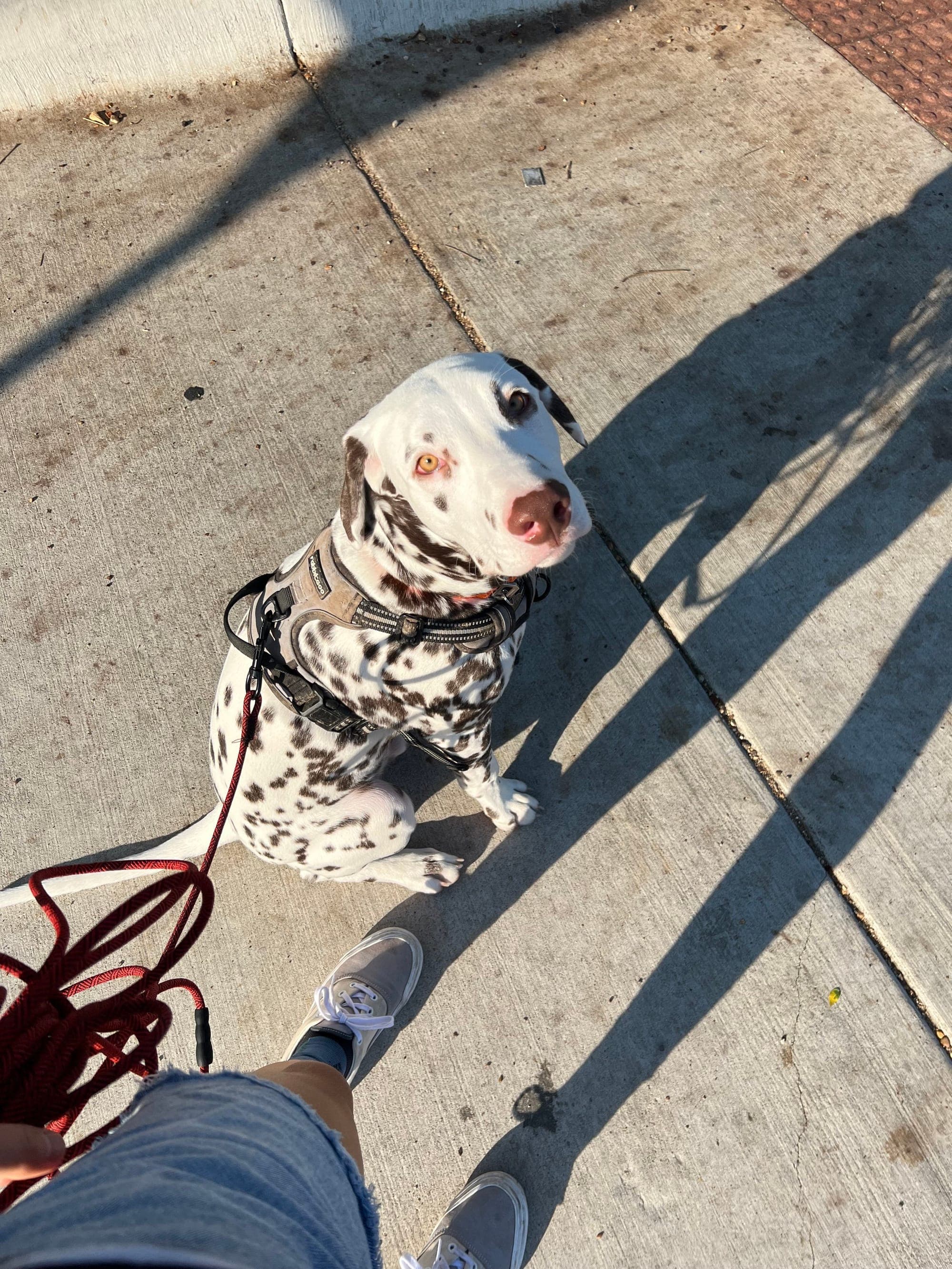
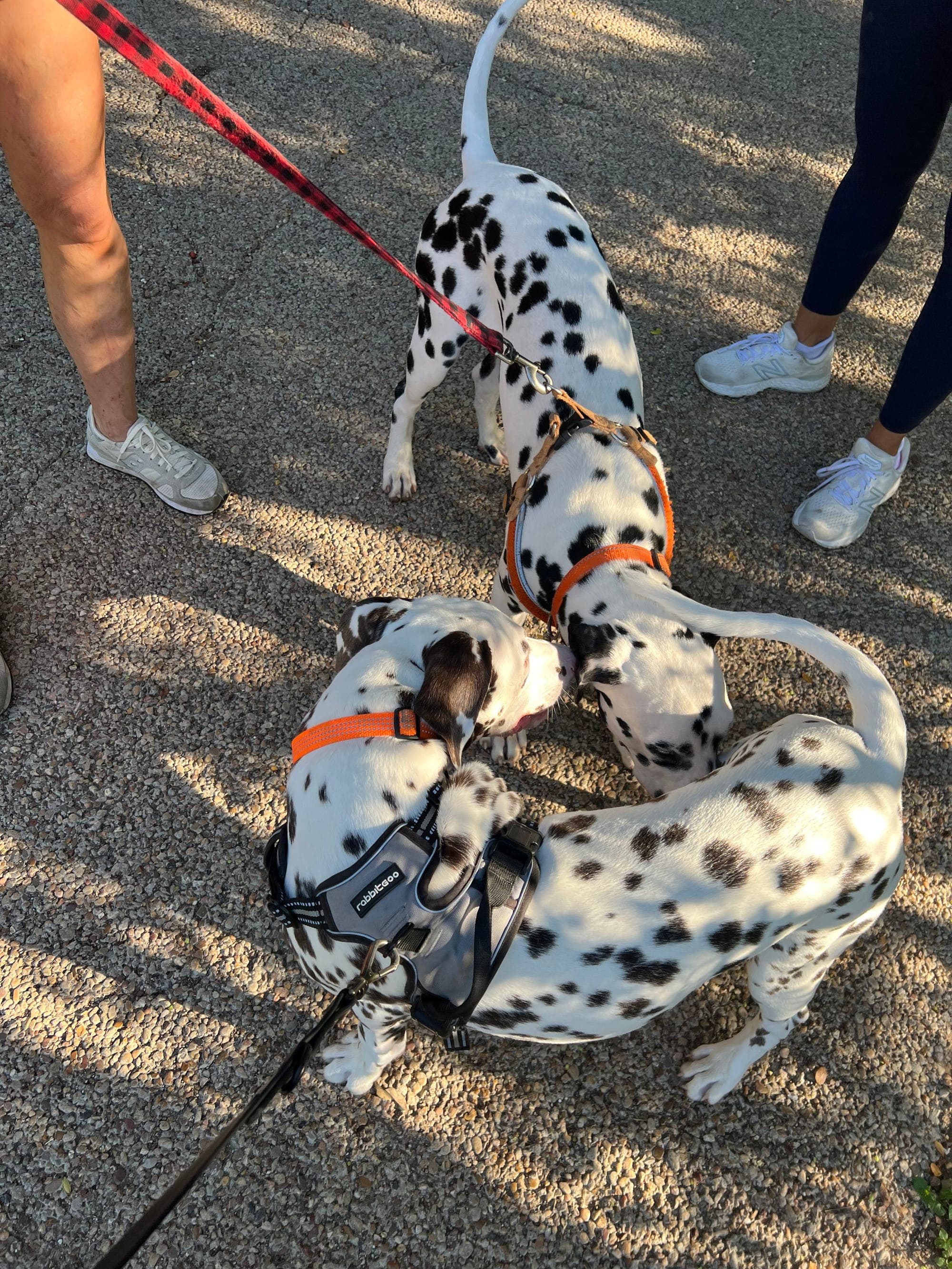
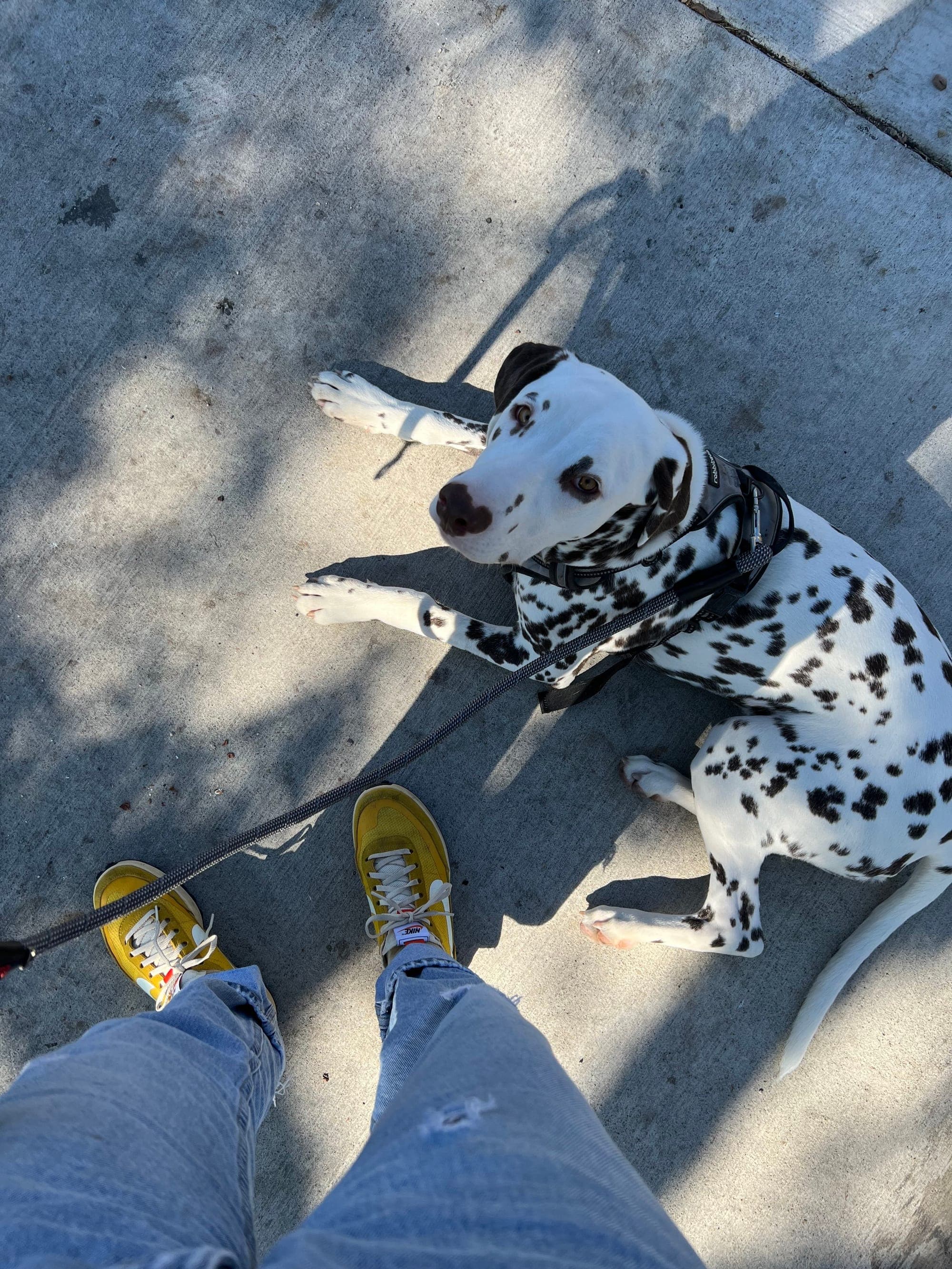
We sat down with Maddy and her liver-spotted, 5 month-old Dalmatian, Pete, to talk puppy parenthood and how it shifts everything from your daily routine to your inner confidence. Biggest takeaway: Like most things in life that end up being worthwhile, raising a young puppy is both extremely challenging and deeply rewarding.
How did you know you were ready to become a dog parent?
I grew up around dogs my whole life, so I figured once I moved to Austin (left NY), and had the house, the yard, etc. that I could finally get the dog and it would be okay.
There was always a reason or a roadblock to not getting a dog. I had an intense travel-heavy job, small NYC apartment, plans on the calendar, and a general fear of starting a new routine all over again. Taking on a dog is additive, but it is absolutely a new start. To new dog parents or first-time puppy parents, I’d say — don’t underestimate the level of change a dog will bring. It’s doing you and your dog a huge disservice.
What’s the most vulnerable thing about adopting a puppy under one year?
Pete is one of the hardest things I’ve ever done in my life.
Pete is inexhaustible. My dog trainer said, “He would even keep a trainer busy.” It was both validating and a little devastating. But that’s okay. I knew that taking care of Pete would affect my day-to-day routine, but I didn’t know how much it would affect my equilibrium and sense of self.
There’s just a lot that can go wrong and you’re trying to do everything right. You can see behavioral changes forming. I do my best to give him space, but also provide meaningful structure. I’m learning to let go of the idea of what I thought our relationship would look like or what our routine would be, because what I imagined is just not realistic. It may be in time. And with more training. And time together. I’m learning to let go of what I thought I needed to do in order to be a good dog parent.
We’re writing and learning a common language together — Pete and I. We’re teaching each other something. And there’s obviously some friction in learning something new. I’m reminding myself of that. There’s some humility in that — in being a beginner.

What’s been the most illuminating thing about raising Pete, thus far? What’s been the most challenging or trying?
I had to learn how to adjust my expectations. He is his own person. He’s his own dog. He’s going to do what he’s going to do.
I really wanted a dog who sat next to me on the couch, but right now, he’s not that dog. He’s independent. Which is really positive, but also a little heartbreaking.
Our love languages are a bit different. But we also both love to run. And everyone says we give the same side eye. We’re figuring it out.
Tell us about Pete — what’s he like? What’s his schedule like?
Before Pete, I used to get up in the morning and run 6-7 miles. Now the focus has shifted to walking and taking care of Pete.
We do occasionally go on runs together, but in reality he’s only old enough to do about a mile. He’s got to develop muscles and strength. But the good news is that Dalmatians were bred to run alongside carriages, so he has incredible stamina — which will improve as he matures. So, I wish I had a horse and carriage for him to run beside. We just have to wait. So, he can get to that level.
He has a hard time settling down. He holds a lot of stress and I’m not always sure how to help him. I’m trying to figure out how to make him feel safe. As people, we have to actively work to regulate our nervous system. We also need to help our dogs with this, too
When a dog shakes, that’s them trying to calm down and relieve stress. When they fully shake it’s a chance for them to reset how they feel. Scratching or self-grooming is also an indicator of stress or a stress-relief technique.
So, I’ll give him a toy or a bully stick or his lick mat. But I also want him to know how to self-soothe, too.
What’s the biggest learning curve you’ve encountered raising a puppy under the one-year mark?
You don’t know what you don’t know, so everything’s a learning curve if you haven’t done it before. So, it’s like a ruling out process of what to do versus what not to do. So, that’s constantly humbling.
Doing the training has been pretty revelatory. Having treats on you constantly is critical. Every moment is a teaching or training moment. So, having them on me is an opportunity to integrate his routine into mine. He’s on the clock all the time. So, being able to work on that with him while in office, etc. helps move that process along much faster.
I was like oh these people with these treat pouches what are they doing? But now I keep them within reach. I am now a treat pouch wearer and believer.
What was the process like finding the right vet for you and Pete?
Vets are controversial. Period. A lot of vets are owned by massive corporations. That doesn’t necessarily mean that they will provide poor care. Working at Maev has made me skeptical about all health care — human and canine.
Friend referrals are invaluable and a great place to start. I honestly think it’s the best way to go. It takes a lot of the guesswork out of it for you. Otherwise, research is your best friend. If you have a dog with a breed-specific predisposition, definitely find a vet with that skill set or breed experience. You’ll know really quickly if it’s a good fit. But at the end of day, you’re the parent. You make the decisions. Just think of the vet as another resource.
What’s Pete’s preferred style of communication?
He’s a very vocal dog. He talks all the time. He gets distracted a lot. Working with him through training and getting him to focus and in a rhythm has been great. That’s when he’s happiest. He seems to know he’s doing a good job.
What developmental or sensorial toys do you recommend for other puppy parents?
I highly recommend a long lead for training and command recall, and so your puppy can safely explore the world while still getting a bit of space and autonomy. Also, a flirt pole — it’s like a cat toy for dogs —which is designed to help with their agility and coordination. Oh, and a lick mat. It keeps Pete mentally engaged and it helps him slow down when he’s eating.